

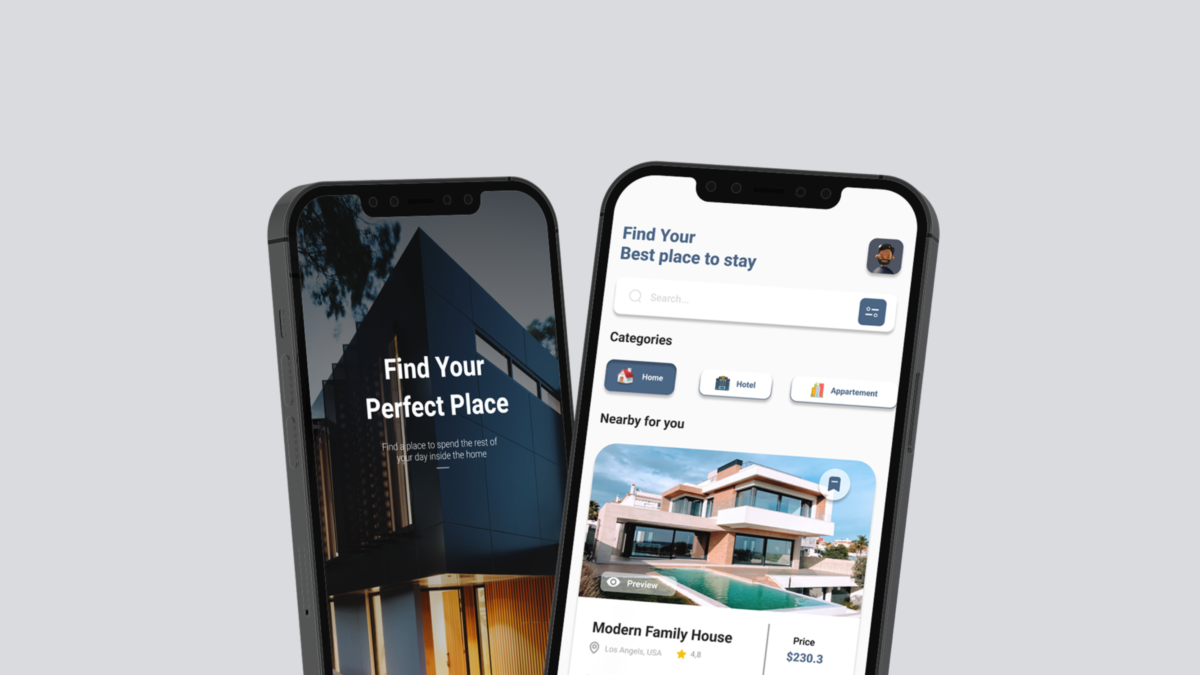
Why Your Real Estate Website Must Prioritize Mobile Experience
In today’s property market, a real estate website is no longer just an online presence; it is a mission-critical sales asset.
The way buyers search for property has changed permanently. Real estate consumers are no longer sitting behind desks scrolling through listings on large screens. Instead, smartphones have become the primary tool for property discovery. Industry data shows that over 60% of real estate website traffic now comes from mobile devices, and in mobile-heavy markets like Kenya, this number can exceed 80%.
If your property listings are not optimized for mobile users, you are not just losing traffic—you are losing ready-to-act buyers.
This is why mobile-first design for property listings is no longer optional. It is the foundation of modern real estate lead generation.
What “Mobile-First Design” Actually Means (And What It Doesn’t)
Many real estate professionals believe they have a mobile-friendly website simply because it “resizes” on smaller screens. This is a costly misconception.
Responsive design adjusts a desktop layout to fit mobile screens. While better than nothing, it often results in cluttered interfaces, slow load times, and poor usability.
Mobile-first design, on the other hand, starts with the smartphone user as the priority. The website is designed from the smallest screen upward, ensuring speed, clarity, and usability before expanding to tablets and desktops.
This approach ensures your listings are built for:
- Vertical scrolling
- Touch navigation
- Fast decision-making
- On-the-go browsing
Mobile-first design aligns perfectly with how real buyers actually behave during their property search journey.
Google’s Mobile-First Indexing: Why SEO Depends on Mobile UX
Mobile optimization is no longer just a user experience issue, it is a search engine requirement.
Google now uses mobile-first indexing, meaning it primarily evaluates and ranks the mobile version of your website, not the desktop version. If your mobile experience is slow, confusing, or broken, your rankings will suffer, even on desktop searches.
According to Google’s own documentation on mobile-first indexing, poorly optimized mobile sites are more likely to lose visibility in competitive search results.
External reference: Google Search Central – Mobile-First Indexing
This has a direct impact on Real Estate SEO, especially for high-intent local searches like:
- “3-bedroom apartments in Westlands”
- “plots for sale in Kitengela”
- “off-plan apartments in Nairobi”
A weak mobile experience can silently destroy your local SEO performance.
👉 Related resource: Real Estate SEO in Kenya: What Actually Works
Speed Matters: The 3-Second Rule for Property Listings
Mobile users are impatient, and rightly so.
Research shows that if a mobile page takes longer than three seconds to load, more than 50% of users will abandon it. In real estate, where listing pages are image-heavy, speed becomes a major conversion factor.
To maintain fast performance:
- Property images should be compressed without losing quality
- Unnecessary scripts and plugins should be removed
- Code should be optimized and minified
Google’s PageSpeed Insights clearly shows how load time impacts user retention and rankings.
External reference: Google PageSpeed Insights
This is why performance optimization should be part of Real Estate Website Maintenance, not an afterthought.
Designing for Thumbs, Not Mice
A mobile-first real estate website must be designed for human behavior, not desktop habits.
On mobile, users interact with:
- Thumbs
- Swipes
- Short attention spans
Effective mobile UX includes:
- Large, tap-friendly buttons
- Simple navigation menus
- Clear property filters
- Easily readable text without zooming
Property search tools should be intuitive, allowing users to filter by price, location, or bedrooms without friction. When UX is optimized, users stay longer, and longer sessions signal quality to search engines.
👉 Related resource: What Makes a Real Estate Website Convert?
Mobile Lead Capture: Reducing Friction to Zero
The ultimate purpose of your website is lead generation, and mobile users require a different approach.
Long forms are one of the biggest conversion killers on mobile. Instead:
- Forms should request only essential details
- Autofill should be enabled
- CTAs should be visible without excessive scrolling
One-click actions are especially powerful. A buyer standing outside a property should be able to:
- Call instantly
- Send a WhatsApp message
- Request a viewing with one tap
This is where mobile-first design directly impacts speed-to-lead, a key conversion metric in real estate.
Immersive Media: Turning Mobile Browsers into Serious Buyers
Mobile-first property listings are not limited to static images.
Modern buyers expect immersive experiences, including:
- 3D virtual tours
- Video walkthroughs
- Drone footage
- Interactive galleries
These tools allow buyers to self-qualify before contacting you, resulting in higher-quality inquiries. Listings with virtual tours consistently generate more engagement and longer session durations, which benefits both conversions and SEO.
Mobile-First Design Is a Competitive Advantage
Most real estate websites still treat mobile optimization as an afterthought. This creates an opportunity.
A website that loads fast, feels intuitive, and allows instant contact becomes the easiest option, and in real estate, ease wins deals.
Mobile-first design also future-proofs your platform, ensuring it adapts to evolving buyer behavior and search engine requirements.
Final Question: Is Your Website Built for How Buyers Actually Search?
Ask yourself:
- Does my website load in under three seconds on mobile?
- Can a buyer contact me with one tap?
- Are my property listings easy to browse on a small screen?
- Does my mobile site support my SEO strategy?
If the answer is no, your website may be costing you leads every single day.
Final Takeaway
Mobile-first design for property listings is no longer a trend, it is the standard.
When implemented correctly, it:
- Improves search rankings
- Increases engagement
- Boosts inquiry rates
- Strengthens trust
At Bluxel Africa, we design mobile-first real estate websites that don’t just look good, they convert traffic into serious property leads.

Add a Comment